
We Buy
Fine Pottery
Delft, Moorcroft and Wedgwood — hand-decorated ceramics spanning three centuries of European pottery craft.
What Makes Fine Pottery Collectible
Fine pottery collecting spans centuries of ceramic craftsmanship, from hand-painted tin-glazed earthenware to hand-thrown art pottery and fine stoneware. Collectors prize pieces for the interplay of maker's marks, glaze technique, decorative style, and rarity, with condition, age, and provenance driving value at auction. A well-marked, unrestored piece from a recognised maker or factory can range from a modest decorative item to a significant investment piece.
Makers & Items We Buy
Delft
Delftware is tin-glazed earthenware first produced in Delft, Holland, from around 1600 by Italian-trained potters, reaching its finest period between roughly 1640 and 1740 as Dutch factories exported blue-and-white and polychrome wares across Europe in imitation of Chinese porcelain. The technique involves painting decoration onto an unfired tin-oxide glaze before a second firing, giving the characteristic smooth white ground with cobalt-blue (and later green, yellow, and manganese) designs. From the 1680s onward, factories marked pieces with the owner's initials or factory name, though only around a third of genuine antique wares carry a mark. Collectible value depends on age, factory attribution, and condition; De Porceleyne Fles, founded in 1653 and now known as Royal Delft, is the sole original Delft factory still operating, and early 17th-18th century pieces with clear, authenticated factory marks command the strongest prices — the ware's popularity has also attracted extensive reproductions and fakes we watch for.
Moorcroft
Moorcroft pottery traces its origins to 1897, when designer William Moorcroft began working at James Macintyre & Co. in Staffordshire, creating the hand-decorated Florian Ware that won a gold medal at the 1904 St Louis International Exhibition. William established his own Burslem factory in 1913, the brand was taken up by retailers Liberty of London and Tiffany & Co., and it received a Royal Warrant from King George V in 1928. The pottery is known for its tube-lined decoration technique and rich flambé and floral glazes, and every piece is base-marked to show English manufacture, the year, and the initials of the tubeliner or painter, with an incised "silver stripe" through the WM monogram indicating a second-quality piece. We particularly prize pieces signed by William Moorcroft himself, especially Claremont, Poppy, and Iris designs from 1900-1920, with rare signed and dated flambé examples fetching well into five figures at auction.
Wedgwood
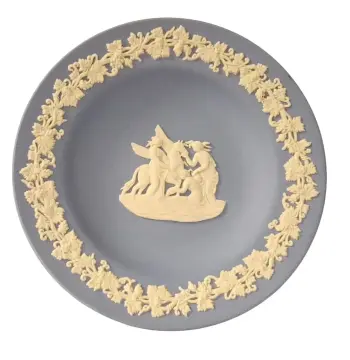
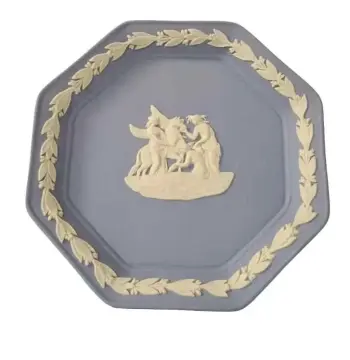
Wedgwood was founded in 1759 in Burslem, Staffordshire, by Josiah Wedgwood, whose innovations in materials and factory production made him one of England's most influential potters. In the 1770s he developed jasperware, an unglazed matte stoneware produced in several colours, most famously the pale "Wedgwood blue," typically decorated with white neoclassical relief figures, alongside earlier creamware and black basalt lines. Wedgwood was among the first manufacturers to consistently mark his wares, and the firm's marking system evolved over time, from an impressed "WEDGWOOD" before 1860 to a three-letter month/potter/year code system used between 1860 and 1929, making dating relatively precise. Value is driven by age, pattern rarity, unusual colourways (yellow, lilac, and multi-coloured jasperware are especially sought after), condition, and completeness of sets, with early 18th- and 19th-century jasperware and limited production pieces achieving the highest prices.

Get an Instant, No-Obligation Offer
Send us photos via WhatsApp or book a home visit — our specialists travel to you anywhere in South Africa.